
Event-Driven Architecture
What Is an Event Mesh? Connected Brokers Across Plants, Data Centres and Clouds
What is an event mesh: a network of connected event brokers that routes events between plants, data centres and clouds, and how vendors build one.
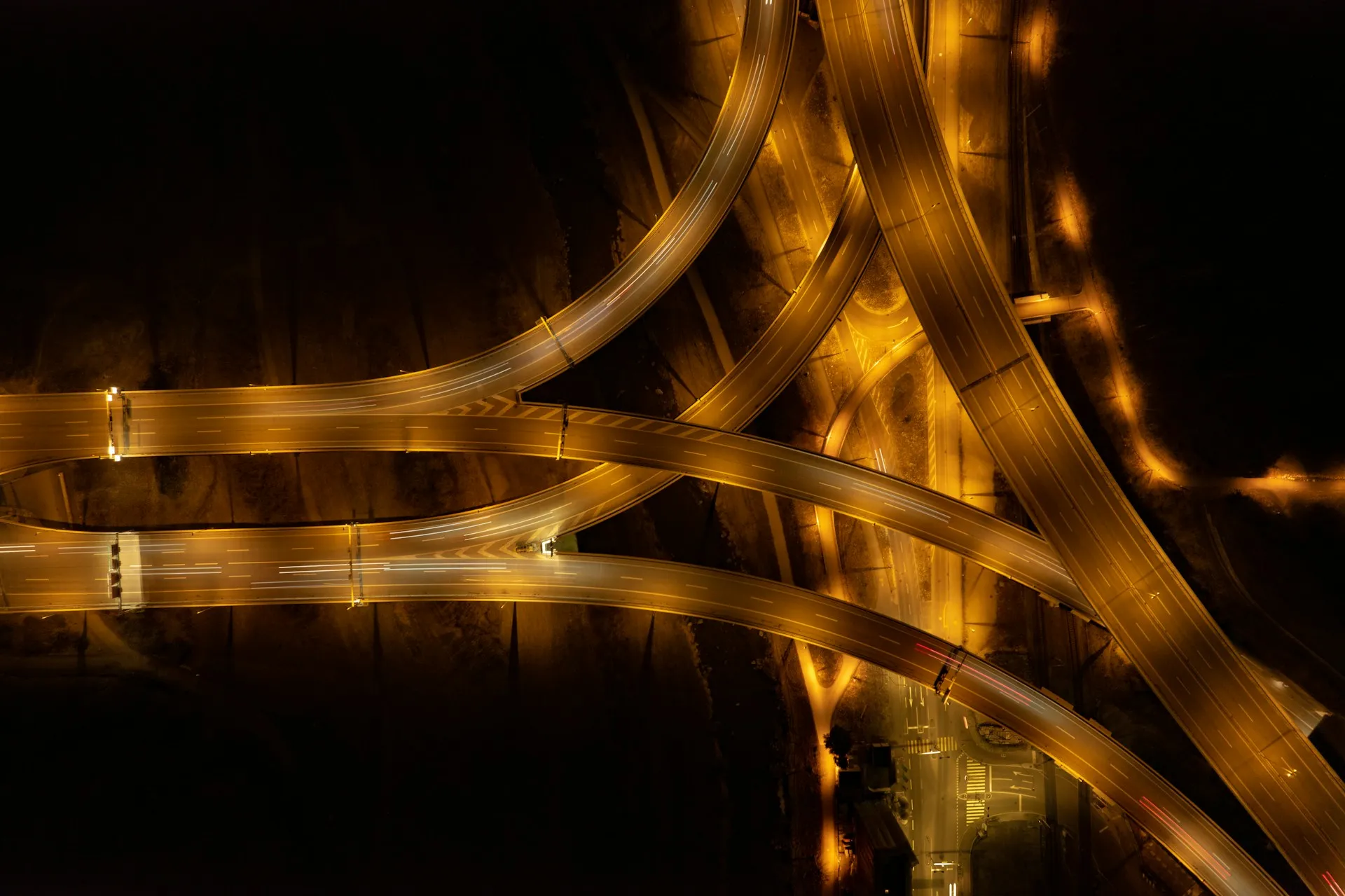
What is an event mesh? It is a network of interconnected event brokers that routes events between applications wherever they run: on a plant floor, in a data centre or in a cloud region. Each application connects to the broker nearest to it. When a consumer subscribes, the mesh learns where that interest lives, and events published anywhere on the mesh find their way to it, with buffering when a link fails and filtering so that only wanted events cross the WAN.
The term was popularised by Solace, which defines an event mesh as “a network of event brokers that allows events from one application to be dynamically routed and received by any other application, no matter where these applications are deployed” (Solace docs). SAP adopted the phrase as a product name, and analysts use it as a category. This page describes the concept independently of any one vendor, as part of our event-driven architecture guide.
Why an event mesh exists: the multi-site problem
One broker serves one site well. Inside a plant, a clustered MQTT or messaging broker handles the SCADA, MES and dashboard traffic with low latency. The difficulty begins when events must leave the site. A manufacturer with ten plants, a corporate data centre and a cloud tenant faces questions a single broker does not answer:
- Where does a consumer connect? If the quality system runs in the cloud, does it open connections to ten plant brokers, or do ten plants push to the cloud?
- What happens when the WAN drops? Events produced during the outage must wait somewhere and arrive later, in order.
- What crosses the link? Sending every tag change from every plant to the cloud is expensive and usually pointless. Only events someone has subscribed to should travel.
- Who is allowed to see what? A supplier portal may see shipment events from one plant, never process data from another.
The traditional answer is a hand-built bridge per flow: a script or connector that copies topic A on broker 1 to topic B on broker 2. It works for three flows. At fifty, nobody knows which bridges exist, which are healthy, or what would break if one stopped. An event mesh replaces those bridges with a routing layer that is configured once and maintained as a system.
Event mesh vs single broker, hub and spoke, and streaming cluster
The four designs below all move events between places. They differ in where routing decisions are made and what happens when a link fails.
| Design | How events move between sites | Strength | Weakness |
|---|---|---|---|
| Single central broker | Every plant connects to one broker in the data centre or cloud | Simple to run and secure | Every plant depends on the WAN in real time; local consumers pay a round trip |
| Hub and spoke with bridges | Each plant has a broker; bridges copy chosen topics to a central broker | Plants keep working offline; familiar | Bridges are configured per flow; consumers at one plant rarely see another plant’s events |
| Streaming cluster with replication | Each region runs a log cluster; topics are mirrored between clusters | Durable history and replay in every region | Replicates whole topics, not individual subscriptions; heavier footprint at small sites |
| Event mesh | Brokers at every location are linked; subscriptions propagate and events route on demand | Any consumer anywhere; only subscribed events cross links; buffering per link | More to design up front; the strongest implementations are commercial |
How vendors build an event mesh: four mechanisms
“Event mesh” is a description of an outcome, and products reach it in different ways. Asking which mechanism a product uses tells you more than whether its marketing uses the word.
| Mechanism | How it works | Examples (as documented by each project or vendor) |
|---|---|---|
| Dynamic subscription routing | Brokers exchange subscription interest and forward each event only to brokers with a matching subscriber | Solace Dynamic Message Routing (Solace); SAP Integration Suite, advanced event mesh, which is built on Solace |
| Clusters, gateways and leaf nodes | Servers form clusters, clusters join through gateways, and remote servers attach as leaf nodes over an outbound connection | NATS: “a leaf node is a NATS server that opens an outbound connection to a remote NATS system and bridges subject interest across it” (NATS docs) |
| Topic replication | Whole topics are copied between clusters, keeping order and history | Kafka MirrorMaker 2 (Kafka docs); Confluent Cluster Linking, which mirrors topics “with byte-for-byte replication” (Confluent); Pulsar geo-replication (Pulsar) |
| Bridging and federation | Configured links copy selected topics or queues between brokers | MQTT broker bridges, RabbitMQ federation and shovel, HiveMQ and EMQX bridging features |
The first two route by interest; the last two copy by configuration. Interest-based routing scales better as consumers come and go. Replication is better when every region needs the full history for analytics. Bridging is simplest for a handful of known flows. A manufacturer can reasonably use more than one: bridges from plant MQTT brokers into a backbone, and replication from the backbone into a cloud analytics cluster.
What an event mesh must handle in a manufacturing estate
WAN outages are normal. Plants lose links to the data centre for minutes or hours. The mesh must queue events at the edge of each link and deliver them in order when the link returns, and the queue must be sized for the longest outage you plan to survive. Ask what happens when it fills.

Filtering belongs at the source. A plant can produce tens of thousands of tag changes a second. Only a fraction is needed off site. A mesh that forwards by subscription keeps the rest local, which protects both the WAN and the cloud bill.
Security zones still apply. A mesh link that crosses from the plant network to the enterprise network is a conduit in IEC 62443 terms. It should be initiated from the more trusted side or pass through a DMZ broker, carry TLS, and be limited by topic-level access control. Our guide to OT network segmentation in brownfield plants explains zones and conduits, and the Solace message VPN page shows how one vendor separates tenants on a shared mesh.
Data residency and ownership. Some events must stay in a country or a site. A mesh needs a way to say “this topic never leaves plant B”, and that rule needs an owner.
Loops and duplicates. Any multi-path topology can deliver an event twice or forward it in a circle if misconfigured. Mature implementations prevent loops by design; consumers should still de-duplicate by event id.
When you need an event mesh, and when you do not
You probably need one when several of these are true: events must reach consumers in three or more locations; plants must keep producing through WAN outages without losing data; enterprise systems need guaranteed delivery from many plants; several protocols (MQTT at the edge, JMS or AMQP in IT, Kafka in the data platform) must meet; and a central team will own the design.
You probably do not when there is one site, or a few sites that only send data to one cloud analytics platform. A clustered plant broker plus a bridge, or a cloud ingestion service, is simpler and cheaper. Our UNS broker guide walks through that decision for the plant layer.
Limits and open questions
- The term is not standardised. No standards body defines “event mesh”. Vendors apply it to quite different mechanisms, so compare mechanisms, not labels.
- Interoperability between vendors is limited. Meshes are usually built from one vendor’s brokers. Joining two vendors’ brokers generally falls back to bridging over a common protocol such as MQTT or AMQP, with the per-flow configuration that implies.
- Operations need a central team. A mesh is shared infrastructure. Without an owner for topics, access and capacity, it decays into the same sprawl it was meant to replace.
- Licensing scales with locations. Commercial meshes are typically priced per broker, capacity or connection, and public prices are rare. Model the cost at your target number of sites, not the pilot.
- Analytical history is a separate question. Routing meshes keep events until they are delivered. Long retention and replay for analytics usually still needs a streaming platform alongside.
How to evaluate an event mesh
- Which mechanism does it use: subscription routing, gateways, replication or bridging?
- How much does each plant buffer during a WAN outage, and what happens when the buffer is full?
- Can routing be restricted so that named topics never leave a site?
- Which protocols can publish into it and consume from it, and are any features downgraded on some protocols?
- How are topics, access rights and links configured across sites: one console, code, or per broker?
- How does it connect to the Kafka or cloud streaming platform the data team already runs?
- What is the smallest footprint that can run at a plant, and who supports it there?
- How is it licensed at ten sites, and at fifty?
If the answers depend on how your plants, DMZs and WAN are laid out, an IT/OT integration review is where we would start, before any product shortlist.
Deeper
There are no child pages under this guide yet. These pages go further:
- Solace Event Mesh: one vendor’s implementation in depth, independently reviewed
- Solace Dynamic Message Routing: how subscription propagation works in practice
- Solace hybrid and multi-cloud: plants, data centres and three clouds on one mesh
- Event Broker Comparison: the products behind each mechanism, on the same dimensions
- Kafka vs MQTT: where the streaming log fits beside the mesh
Back to the event-driven architecture hub.
Frequently asked questions
What is an event mesh in simple terms?
An event mesh is a set of event brokers in different places, such as plants, data centres and cloud regions, connected so that they behave like one routing layer. An application publishes to its local broker, and the mesh delivers the event to every subscriber that wants it, wherever that subscriber is connected, without someone building a separate bridge for each flow.
What is the difference between an event mesh and a service mesh?
A service mesh, such as Istio or Linkerd, manages synchronous calls between microservices inside a platform: routing, retries, mutual TLS and telemetry for request and response traffic. An event mesh manages asynchronous events between brokers across sites and clouds. They solve different problems and can coexist; the shared word is about connecting many endpoints through a managed layer.
Is an event mesh the same as an event bus?
Not quite. An event bus usually means one logical channel inside a single platform, such as a cloud event bus that routes events between services in one account. An event mesh spans several brokers in several locations and routes between them. A mesh can be thought of as many buses joined together with routing and buffering between them.
Does Kafka provide an event mesh?
Kafka itself is a streaming cluster, usually in one location. Multi-site Kafka designs replicate topics between clusters with MirrorMaker 2 or, in Confluent's products, Cluster Linking. That gives a similar outcome for data platforms, but it replicates whole topics rather than routing individual events by subscription. Whether to call that a mesh is a matter of definition.
Does a single plant need an event mesh?
Usually not. A single site is normally well served by one broker, clustered for high availability. A mesh starts to pay off when events must cross sites, data centres or clouds reliably, with buffering when the WAN fails, filtering so only needed events travel, and one security model across all of it.
References and further reading
- Understanding Event Meshes · SolaceThe vendor that popularised the term, and its definition.
- Leaf Nodes · NATS documentation
- Geo Replication · Apache Pulsar
- Cluster Linking for Confluent Platform · Confluent
- Apache Kafka documentation: geo-replication · Apache Software Foundation
- SAP Integration Suite, advanced event mesh · SAP