
Insights
When the OEM Won't Give You the PLC Program: What You Can Legally Do
OEM won't give you the PLC program? What is locked, where the legal line sits, how to ask in writing, and what to write into your next purchase order.

Table of contents
Your plant paid for the machine, it runs every shift, and nobody on site can open its PLC program. The OEM won’t give you the PLC program, and the next change to a setpoint, a sensor or a recipe now goes through a service desk.
Joltek’s position is that this is usually a commercial and paperwork problem before it is a technical one. What a plant can do depends on which of five locks is in place and on what the original purchase paperwork says. The answer is nearly always a written ask, backed by the next purchase, and never a break-in.
Joltek’s founder, Vladimir Romanov, is a consultant and systems architect who has worked on a converting line where the machine builder’s source projects were not on site and one HMI application existed only on the panel. The same problem comes up elsewhere, for example at a paper converter whose controllers are password protected.
This guide is for the plant engineering manager who owns the line but not its code. It covers:
- what you probably already hold, before you ask for anything;
- the five locks, and what a plant can legitimately do about each;
- who owns the code, and where the legal line sits, read from the text of the law;
- why a safety program is a hard stop;
- how to ask the OEM in writing, with a sample letter, and what to write into the next purchase order.
For the contract side of the same problem, see the systems integrator playbook.
A note on what this post is. This is not legal advice. Where it describes the law, it quotes or closely follows the text of the statute, the regulation or the Copyright Office report, and it says when a point is Joltek’s own analysis. It does not apply the law to any particular machine or contract; that takes a lawyer who has read your paperwork. It also does not explain how to defeat a lock, and it will not.
What can you do when the OEM won’t give you the PLC program?
List what is locked, check what you already hold, read the purchase paperwork, ask in writing with the next purchase as the offer, and fix the specification for the next machine. Do not try to break the lock: it can be unlawful, it can end the OEM’s support for the machine, and a safety program must never be touched.
The steps run in a fixed order:
- Inventory the locks. Name which of the five locks is on each machine (section 3).
- Inventory what you hold. List the uploads, drawings, panel applications and licences already in the plant (section 2).
- Read the purchase order and software terms before the statute. The contract usually decides more than the law does (section 4).
- Send one written ask. Name the file or the access, the purpose and the offer (section 7).
- Fix the purchase specification. Write the deliverables as files into the next order (section 10).
Joltek’s experience is that most of these locks are commercial. The OEM’s reasons are commercial, and what moves it is the next order, not an argument about rights.
What do you already have before you ask?
More than most plants think: the running controller image from an upload, the drawings, the HMI application on the panel, tag and I/O lists, old backups and licences. On the converting line the controller program could be uploaded and the HMI lived only on the panel. Take the inventory first, so the ask is specific.
A request that says “send us the program” gives the OEM an easy no. A request that names the files, and says what the plant already holds, is harder to wave away.
Look for these items:
- the controller image, from an upload or from any old backup on a laptop;
- the electrical drawings and any as-built markups;
- the I/O list and tag list, in any form;
- the HMI application on the panel, and any copy of its project;
- the software licences, dongles and installation media for the engineering tools;
- the purchase order and its software terms;
- the manuals, and the FAT or SAT records from commissioning.
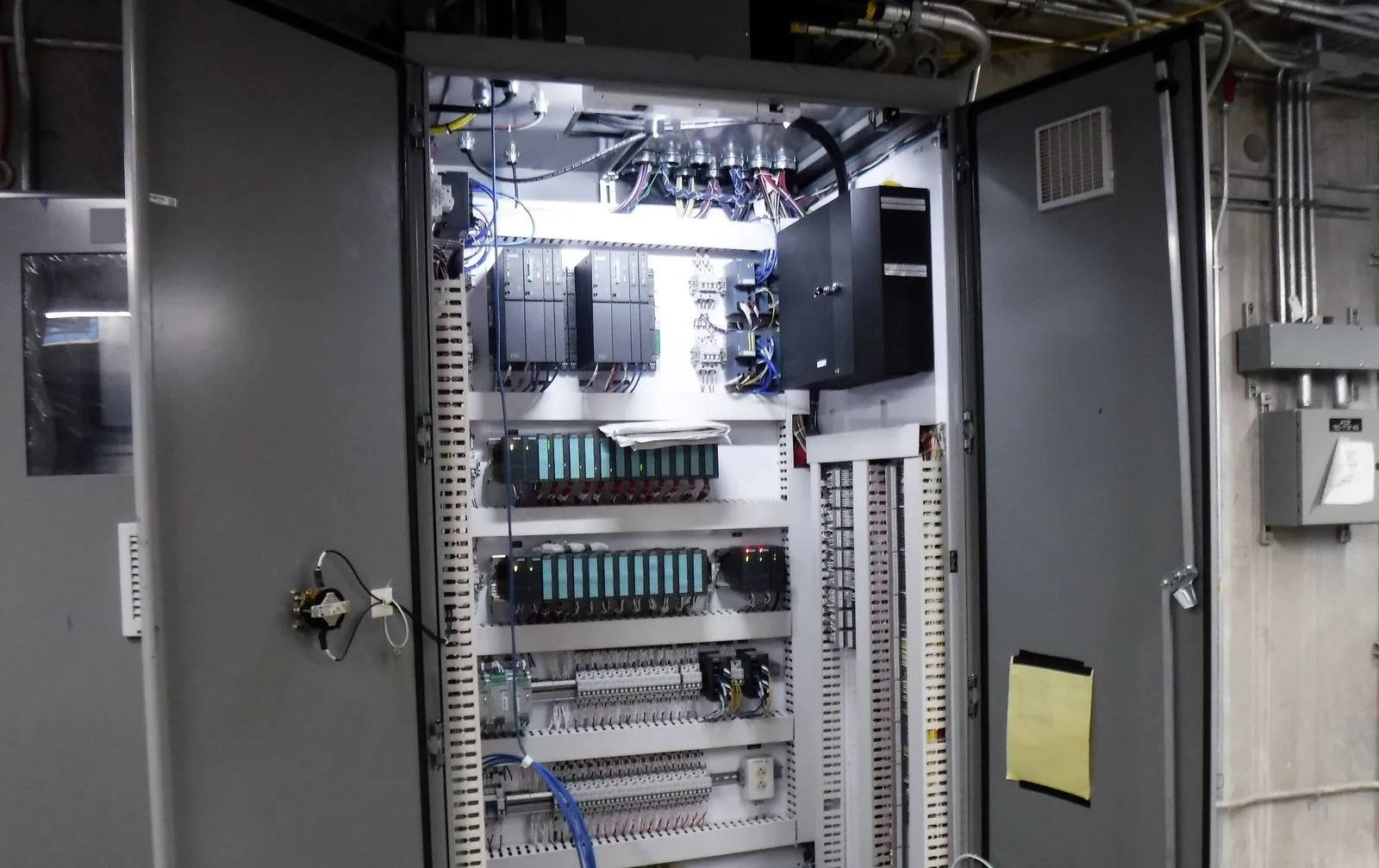
Joltek worked on one such line, described in a converting line with no source projects and an HMI that existed only on the panel. It had three OEM machines and no source projects for the HMIs. The controller program could be uploaded, and the engineering toolset was a trial edition with about three weeks left.
Upload-only synchronisation and a combined controller-and-HMI project made HMI work possible again, and a licensed installation was recommended before commissioning. The case study puts the cost in its own words: the absence of a combined controller-and-HMI source project “cost days across this engagement”.
The limits are plain. That engagement produced no negotiation outcome with the OEM, and this post does not claim one. The case study describes the HMI source projects as not available, not as locked, and it does not describe getting around any lock.
What an upload returns depends on the protection and the download setting the OEM chose. Section 3 returns to this.
What exactly is locked on your machine?
Five different locks sit behind the phrase “the OEM locked the PLC”: a project password, source or know-how protection, a controller lock, a safety signature and a runtime-only HMI. Each hides something different and has a different remedy. The table maps each lock to what a plant can legitimately do and who to ask.
Most advice on this problem treats the lock as one “password problem”. That is where it goes wrong. A password on a project file, a protected function block and a safety signature can look alike on a screen, but they hide different things, and only some of them can be asked for in a letter. The first job is to name which lock you have.
The table has five locks and one account. The sixth row, the OEM’s remote gateway, is not a lock on the program, but it is where plants often find that the OEM holds the only way in.
| Lock type | What it hides | What the plant can legitimately do | Who to ask |
|---|---|---|---|
| Project file password | The whole offline project: logic, tags, comments | Ask for the file or the password in writing. In the meantime, run the machine, and take and keep a backup of the controller image. | The OEM’s commercial contact, not the service desk |
| Source or know-how protection on a routine, block, add-on instruction or library | The logic of that one component, usually not its interface | Ask for an unprotected version, or for the key or licence, under written terms. Ask that any proprietary library go into escrow. | The OEM |
| Controller lock (read or upload protection, or source not downloaded to the controller) | The program inside the controller | Check what an upload actually returns before assuming anything. Then ask. | The OEM |
| Safety lock and signature | Nothing is hidden. It marks a validated state of the safety program. | Do not touch it. Ask for the signature record and the authorised path for any change. | The OEM, and the plant’s safety lead |
| Runtime-only HMI | The editable HMI application. Only a compiled runtime remains on the panel. | Inventory what is on the panel. Check whether the vendor’s toolset documents an upload. Ask the OEM for the project. | The OEM; the toolset vendor for licensing |
| OEM-held remote gateway and service account | Fault data and diagnostics | Ask for administrator rights on the account and for a read-only data feed. | The OEM (see the remote access section) |
Sources: Beckhoff Infosys, “Control of access to the PLC source code”; CODESYS Help, “Secure developing”; Omron EU knowledge base, “Securing the NJ501 and its programs”; Siemens, Programming Guideline for Safety, V1.6, 07/2024. The “who to ask” column is Joltek’s recommendation.
The vendors’ own documents show why the mechanism matters. Beckhoff states that, for TwinCAT 3 projects with encrypted source, it cannot restore a password that has been lost. CODESYS states that write and access protection does not provide sufficient know-how protection and recommends encryption, which means a lock that looks light on screen may be the strong kind.
Omron’s NJ-series documentation shows the same split from the other side. By default, the project source is downloaded to the controller together with the executable program, and there is an option not to transfer it. Locked programs and locked controllers need the correct password. So what an upload returns is not a fact about the controller. It is a setting somebody chose when the program was delivered.
That is why the inventory in the previous section matters. A plant that has never tried an upload does not know whether it holds the logic, a stripped version of it, or nothing. Checking what the controller returns, through the vendor’s ordinary tools and with the OEM’s knowledge, is a legitimate step. Trying to defeat a lock to find out is not.
The paper converter in the field data shows the commercial side of the same table: controllers that are password protected, and a vendor that will not release the software without the base files. The lock was the smaller issue. The missing base files were the real one.
Backup tools also treat protected files differently from open ones. Before the first backup of an OEM machine, read how source-protected and encoded files behave in backups.
Nothing in the third column asks a plant to open, bypass or probe anything. Every action there is either something the plant already controls, or a request the OEM can say yes or no to.
Who owns the PLC code you paid for?
Usually whoever wrote it, until a signed writing says otherwise. Copyright starts with the author, and 17 U.S.C. 204(a) makes a transfer invalid without a signed writing. Computer programs are not among the commissioned works section 101 lists as work made for hire. A plant that paid for custom code may hold only a licence to run it.
Read the paperwork first and the statute second. The purchase order and the software terms say what the plant received, and the statute sets the default that a contract either leaves alone or changes.
Under 17 U.S.C. 201(a), copyright “vests initially in the author or authors of the work”. Under 17 U.S.C. 204(a), a transfer of copyright ownership, other than by operation of law, is not valid unless it is in a writing signed by the owner of the rights conveyed or the owner’s authorised agent. On the statute’s text, payment alone is not a signed writing.
The work made for hire definition in 17 U.S.C. 101 is the other way ownership can land with a buyer. For a specially ordered or commissioned work, it applies only to nine listed uses, and only when the parties sign a writing saying so. Computer programs are not on that list.
Joltek’s reading, which is analysis and not a legal conclusion, is that code a plant commissioned is usually owned by the person who wrote it and licensed to the plant, unless a signed writing transfers it. The statute’s text points this way. A lawyer should confirm it against any specific contract.
The October 2024 report of the Register of Copyrights, discussed in the next section, calls it unclear whether, in some cases, the software used by commercial and industrial equipment is licensed and negotiated separately from the physical equipment. Read the software terms as their own document.
Look for these items in the contract:
- the scope of the licence: what the plant may run, copy and install;
- modification rights: whether the plant may change the program, or only run it;
- delivery of source: whether any editable project was a deliverable at all;
- confidentiality terms on the program and the libraries;
- any clause saying the plant may not copy, alter or reverse the software.
A missing clause tells the plant where to aim the written ask in section 7. A restrictive one turns the ask into a request to change terms.
Can you legally get around the lock?
Not safely. The statute’s text points this way: 17 U.S.C. 1201(a)(1)(A) says no person shall circumvent a technological measure that effectively controls access to a protected work. The Register’s October 2024 recommendation declined an exemption for a broad class of commercial and industrial devices. A contract can add limits. Ask counsel and the OEM.
The rule is in 17 U.S.C. 1201: “No person shall circumvent a technological measure that effectively controls access to a work protected under this title.” This is not legal advice; the sentences below follow the text of the sources named.
Section 1201(a)(3)(B) says a measure effectively controls access to a work if, in the ordinary course of its operation, it “requires the application of information, or a process or a treatment, with the authority of the copyright owner, to gain access to the work”. The statute does not separate a project password from a controller lock. The text points toward a password on a file or controller that holds the OEM’s program, and a plant should assume that it applies. A lock that guards only the plant’s own data is a different question that counsel has to answer.
Section 1201(a)(2) separately bars trafficking in tools primarily designed to circumvent. This guide names no recovery tools for that reason.
Two narrow provisions come up. Section 1201(f) concerns identifying the elements needed for an independently created program to interoperate with other programs. It is not a general permission to read, copy or modify an OEM’s program, and this guide does not apply it to any reader’s case. Section 117 allows an owner of a copy of a program to make a copy or adaptation as an essential step in using it with a machine. Whether a plant owns a copy or holds a licence is a contract question this guide does not resolve.
Then the repair exemptions. The regulation at 37 CFR 201.40 lists the classes of works for which the prohibition does not apply. Paragraphs (b)(15), (16) and (17) cover consumer devices, equipment primarily designed for retail-level commercial food preparation, and medical devices, among others. On the regulation’s text, none of them names industrial controls. The most recent amendment is 89 FR 85446, dated 28 October 2024.
The Register of Copyrights examined the question in the Ninth Triennial recommendation of October 2024. It “declines, however, to recommend an exemption for a broad class of software-enabled commercial and industrial devices”. It also found that proponents did not show that industrial equipment shares enough commonalities for a device-agnostic approach. According to that report, the 2021 rulemaking also declined a broad expansion.
Two limits apply to every exemption, and they are worth stating plainly:
- on the statute’s text, the exemptions apply only to the prohibition on the act of circumvention;
- as NTIA’s view is recorded by the Register, an exemption does not “necessarily provide a safe harbor from, or defense to, liability under other applicable laws or breach of contractual obligations”.
The reverse limit matters as well. A missing exemption does not settle a case by itself. The statute’s text points to two questions: whether the lock controls access to a copyrighted work, and whether the owner authorised the access.
So the practical line is short. This is not legal advice: take legal advice before anything else, and ask the OEM instead. The written ask in section 7 is slower than a shortcut and carries none of this risk.
Why is the safety program a hard stop?
A changed safety signature means the safety program has to be validated again and accepted. That is Siemens’ stated rule, and it shows a safety lock is a validated state, not a secret. A plant that reaches safety logic by any route but the authorised one holds an unvalidated safety function. Leave it, and ask for the signature record.
Siemens’ Programming Guideline for Safety, version 1.6 of July 2024, says in section 3.8 that when the signature is changed, the safety program has to be validated again and accepted. It also says the signatures are part of the safety printout.
The safety lock differs from the other four. Each of those hides something a plant may legitimately want to see. The safety signature hides nothing. It records a state the plant must preserve.
The sensible actions are all on the paperwork side:
- leave the safety program as delivered;
- ask the OEM for the signature record and the authorised path for any change;
- bring in the plant’s safety lead before any change to safety logic is considered.
This guide gives no method of any kind for getting into safety logic, and it will not.
How do you ask the OEM, and what do you offer in return?
In writing, to the OEM’s commercial contact, naming the machine, the exact file or access you need, and the purpose. Offer what the OEM values: the next purchase, a paid handover, or a licence-only deal with confidentiality terms. In Joltek’s experience the next order carries the weight, not the legal argument.
This section is Joltek’s recommendation. No outside source on negotiation tactics was found, and this guide reports no negotiation outcome.
Write to the OEM’s commercial contact, not the service desk, and copy the plant’s purchasing lead. The commercial contact can trade; the service desk usually cannot.
Offer what the OEM values, in this order:
- The next purchase. A named machine or spare-parts order in the next budget year is the strongest offer, because it is the thing the OEM wants.
- A paid handover fee. The OEM spends time packaging the files, and a fixed fee pays for it.
- A licence-only deal with confidentiality terms. The plant gets editable files for its own use, and the OEM keeps its libraries and its rights.
- Escrow for what the OEM will not hand over. Section 9 covers its limits.
A sample request letter
The letter below is Joltek’s suggested wording. It is not a legal form, and it claims no right. Adapt it, and fill in the bracketed items.
Subject: Request for editable project files, [machine name], serial [number], purchase order [reference]
Dear [name],
[Plant name] bought the [machine name], serial number [number], under purchase order [reference] dated [date]. It runs at our site in [location]. We are writing to ask for the files our maintenance team needs to keep it running.
We ask for the following: the editable controller project; the editable HMI project; the tag list and I/O list; the drive parameter exports; and the credentials for any password or protection set on those files. If you prefer not to release a proprietary library in editable form, tell us, and we can discuss holding it in escrow.
The purpose is the maintenance and continuity of our own operation of this machine, and nothing else. We will use the files only for that, we will not pass them to any third party without your written agreement, and we are willing to sign confidentiality terms.
In return we can offer [the next purchase of (item) planned for (date), a handover fee of $(amount), or a licence-only arrangement on terms you propose].
We would be grateful for a written reply by [date]. If you cannot provide any item, please tell us which one and what terms would make it possible. We are not asking for anything beyond what you are willing to give in writing.
Regards, [name, title, plant, contact details]
Copy: [purchasing lead]
The ask goes up a short ladder if it stalls:
Two things never belong on that ladder: any attempt to reach the OEM’s servers, and any tool that would show up in the OEM’s logs.
Download the letter and clauses: the OEM Code Request Letter and Purchase-Order Clauses (DOCX) is a ready-to-edit copy of this letter and the purchase-order clauses in section 10.
What if the OEM only offers remote support?
Ask for the data, not the code. The plant can require read-only diagnostic and fault data through an interface it owns, and it should hold the administrator account on any OEM gateway. Remote access has its own guide; this section covers only the code and data question.
Some OEMs answer a request for the program with an offer of remote support. That solves the fault of the day and leaves the plant where it started.
The ask has two parts: read-only fault and diagnostic data through an interface the plant owns, and administrator rights on any OEM gateway account on the plant’s network. Neither needs a line of the OEM’s code.
For a new purchase, one clause is available. OPC UA for Machinery is a basic specification from VDMA and the OPC Foundation for the machinery industry, and a plant can ask for it in a purchase specification.
The architecture and the account-ownership steps live elsewhere: see who holds the OEM gateway account.
Does source code escrow fix it?
Only for one failure: the OEM disappearing. Release triggers are usually bankruptcy, administration or a breach of maintenance obligations, and a deposit nobody has checked may not contain what is needed to rebuild the program. Escrow is a fallback for proprietary libraries, not a cure for an OEM that simply declines.
Escode, an NCC Group business and a software escrow provider, describes the standard terms in its article “Negotiating a Software Escrow Agreement” (17 October 2023). A standard agreement includes release events for bankruptcy, administration and a breach of maintenance obligations, and those can be expanded or limited. That is a vendor source, and it describes escrow in general, not for PLC code.
The same article names the limit. Escrow ensures access to code, but it cannot guarantee that the building blocks needed to maintain the application are captured, so it recommends verification.
Joltek’s reading is that escrow suits OEM failure, not OEM refusal. If the OEM is still in business and declines, no standard release trigger has happened, and an unverified deposit may not contain what is needed to rebuild the program.
Where escrow does help is on proprietary libraries the OEM will not hand over in editable form. Ask for it in the purchase order, as section 10 describes.
This guide recommends no escrow provider.
What should the next purchase order say?
Name the deliverables as files: editable source and project files for controller and HMI, credentials handed over, no source protection without the owner’s written consent, delivery at FAT, a licence to modify OEM libraries, and escrow for what the OEM will not hand over. Some public utilities already write this in their specifications.
The converting-line case study says it directly: “Machine builders hand over what the purchase order asked for.” If the order does not require editable source for controllers and HMIs, a parameter export for every drive and a record of any protection setting changed from default, the plant finds out what it did not ask for on the day it needs it.
Public utilities already write this kind of wording into their specifications. That is not an “industry standard”; no manufacturer owner standard was found. Two examples show the wording.
The City of Tulsa Water and Sewer Department’s PLC Software Standard, dated 22 April 2024, says in section 11 that source code protection should not be used. The integrator must request and obtain written permission, and if it is granted, the integrator gives the City the credentials. The City of Westminster, South Carolina, listed a deliverable in its SCADA RFP (proposals due 6 January 2026) as “Editable source code: PLC and SCADA projects with passwords provided to Owner”.
Sample purchase-order clauses
The clauses below are Joltek’s suggested wording, not a legal form. A lawyer who knows the plant’s standard terms should look at them before they go into an order.
Software and project deliverables, [machine name]
Deliverables as files. The supplier shall deliver, in editable form: the controller project, the HMI project, the drive parameter exports, the tag list, the I/O list and the electrical drawings, for every device on the machine.
Credentials. The supplier shall deliver the passwords, keys and licences needed to open and edit every delivered file, together with the files.
Source protection. The supplier shall not apply source protection, know-how protection or any lock to a delivered file without the buyer’s written consent. If consent is given, the supplier shall deliver the credentials with the files.
Delivery at FAT. The deliverables in clauses 1 to 3 shall be delivered at factory acceptance testing, and their delivery is part of the acceptance criteria.
Licence. The supplier grants the buyer a licence to use, copy and modify the delivered files, and any supplier library they contain, for the maintenance and operation of the machine at the buyer’s site.
Escrow. Where the supplier will not deliver a library in editable form, the supplier shall deposit it in escrow with a verified deposit, released on the supplier’s insolvency or its breach of its maintenance obligations.
Protection record. The supplier shall record any protection setting changed from the default in the controller or the HMI, and deliver the record with the files.
Remote access. The buyer shall hold the administrator account on any remote gateway the supplier installs. The supplier shall provide read-only fault and diagnostic data through an interface the buyer owns.
Payment. The final payment is due after the deliverables in clauses 1 to 3 and 7 have been accepted.
For the integrator side, see the source-code ownership clause in an integrator scope of work.
Frequently asked questions
Who owns the PLC program on a machine I bought?
Usually whoever wrote it, unless a signed writing transfers it. Copyright starts with the author, and under 17 U.S.C. 204(a) a transfer of ownership is not valid without a writing signed by the owner. A plant that paid for custom code may hold only a licence to run it. Read the purchase order and the software terms first. This is not legal advice.
Is it legal to remove a PLC password?
The statute bars circumventing a technological measure that effectively controls access to a copyrighted work (17 U.S.C. 1201(a)(1)(A)), and a contract can forbid it separately. None of the repair exemptions in 37 CFR 201.40(b)(15) to (17) names industrial controls. Ask the OEM in writing instead, and take legal advice before doing anything else. This is not legal advice.
Does right to repair cover my industrial machine?
Not at the federal level for controls code, as far as the text shows. The Register of Copyrights’ October 2024 recommendation declined to recommend an exemption for a broad class of software-enabled commercial and industrial devices. The regulation’s repair exemptions name consumer devices, retail-level commercial food preparation equipment and medical devices, among others, and not industrial controls.
Can I get the program by uploading from the controller?
Sometimes. It depends on the protection and the download setting the OEM chose. Omron, for example, downloads the project source to an NJ-series controller together with the program by default, with an option not to. A protected routine or a password-locked controller returns less. Check what an upload returns, with the OEM’s knowledge, and do not try to defeat a lock.
Will source code escrow fix an OEM that refuses?
No. Escrow releases code when something happens to the OEM, usually bankruptcy, administration or a breach of maintenance obligations. It does not make an OEM hand over code it simply declines to give. A deposit nobody has verified may also lack what is needed to rebuild the program. Use escrow as a fallback for proprietary libraries.
What should I do about a locked safety program?
Leave it alone. Siemens’ safety guideline says that when the signature is changed, the safety program has to be validated again and accepted. A safety lock records a validated state. Ask the OEM for the signature record and the authorised path for any change, and involve the plant’s safety lead before anything is touched.
Where to start this week
When the OEM won’t give you the PLC program, three actions cover most of it. List what is locked on each machine and what you already hold. Read the original purchase order and the software terms. Send one letter to the OEM’s commercial contact, and put the specification right on the next machine before the order goes out.
If you want someone on your side of that purchase, see an owner’s engineer on your side of the next purchase. If a machine is on the floor now with the program locked, book a modernization consultation and send Joltek the situation.
References and further reading
- 17 U.S.C. 1201, Circumvention of copyright protection systems · Legal Information Institute, Cornell Law School
- 17 U.S.C. 204, Execution of transfers of copyright ownership · Legal Information Institute, Cornell Law School
- 37 CFR 201.40, Exemptions to prohibition against circumvention · Electronic Code of Federal Regulations
- Section 1201 Rulemaking: Ninth Triennial Proceeding, Recommendation of the Register of Copyrights · U.S. Copyright Office, October 2024
- Programming Guideline for Safety, V1.6 (Entry ID 109750255) · Siemens, July 2024
- PLC Software Standard · City of Tulsa Water and Sewer Department, April 2024
- SCADA RFP, City of Westminster, SC · City of Westminster, South Carolina, November 2025
- Negotiating a Software Escrow Agreement: Key Terms and Release Conditions · Escode, an NCC Group business, October 2023
- Securing the NJ501 and its programs · Omron Europe knowledge base
- Control of access to the PLC source code · Beckhoff Infosys, TwinCAT 3 Security Management