
Cognex DataMan Barcode Readers: Lineup, Protocols and Selection
DPM Barcode Reader Basics: Reading Dot Peen and Laser Marks
A DPM barcode reader decodes codes marked into metal. Why dot peen and laser etch are hard to read, how lighting decides it, and how DPM codes are graded.
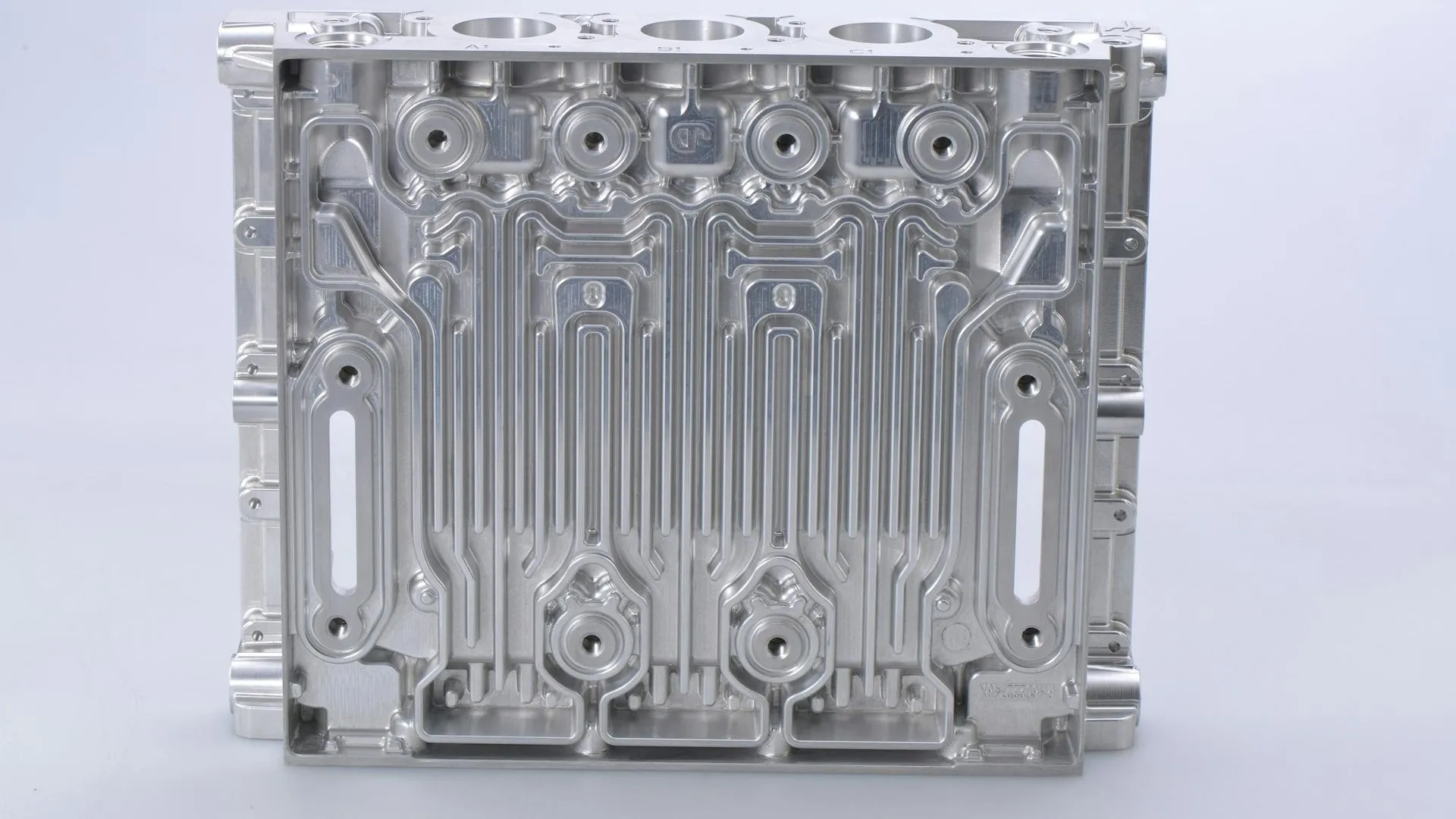
A DPM barcode reader is an image-based reader that decodes a code marked directly into a part, by dot peen, laser etch, inkjet or similar, instead of one printed on a label. The short answer to why this is harder than reading a label: a label carries its own contrast, while a mark on metal is a change in surface shape, so the camera only sees the code if the lighting makes that change visible. This page covers why, which lighting does what, how DPM codes are graded and where direct part marks are used.
It belongs to the DataMan page in the Cognex cluster. Cognex states in its fiscal 2025 10-K that its image-based barcode readers read 1D, 2D, label-based and direct part mark codes (10-K for fiscal 2025). In our view lighting is the main factor in whether a mark reads, for the reasons below.
Why a DPM barcode reader has a harder job
There is no ink. On a label the bars are dark and the background is light under almost any light. On metal, a dot peen mark is a pattern of small dimples, and a laser etch is a change in surface texture or oxide colour. Whether those show as dark or bright depends on where the light comes from.
The surface fights back. Machined metal is shiny, curved parts bend reflections across the code, and cast or painted surfaces add texture that looks like data. A mark that reads on a flat polished sample may vanish on a curved production part.
The mark changes over time. Marks wear, get painted over, collect oil and are re-marked. A code that graded well at the marker may be poor at the point of use.
Decoding is different too. Cognex states its 2DMax with PowerGrid algorithm reads 2D matrix and DPM codes “inside out”, finding the pattern of modules rather than starting from the finder pattern, and can read codes with a damaged finder pattern or quiet zone (Vision Systems). That is a vendor claim, and it helps with damage, not with a mark the lighting cannot show.
DPM lighting: what each geometry does
Lighting is the first decision. The geometries below are general machine-vision practice, described in neutral sources such as Opto Engineering and Edmund Optics.
What Cognex offers. The DataMan 300 line introduced changeable lighting and optics, and the DM390 manual lists integrated high-power lights with red, white, blue and infrared options and polarised covers (DM390 manual). Which part numbers count as DPM versions is carried by the part number and the lighting accessory. We did not check the full DPM part-number list, so confirm it with Cognex or a distributor.
Practical order of trial (our view). Test dark field first on dot peen, coaxial on flat laser marks, dome on curved parts, then add polarisation if glare remains. Test with your worst-case parts, not a clean sample.
How DPM codes are graded
A reader decoding a code and a verifier grading it are different jobs, covered in barcode verification. Here are the DPM points.
| Standard | Applies to | Note |
|---|---|---|
| ISO/IEC 15415 | 2D symbols printed on labels | The 2024 edition notes it can be applied to direct part marks, and correlates better with scanning when used with ISO/IEC 29158 (per ISO’s catalogue) |
| ISO/IEC TR 29158, “AIM DPM” | 2D direct part marks | Cognex documentation uses the older AIM DPM name; ISO lists a second edition of ISO/IEC 29158 dated 2025 |
Cognex’s In-Sight documentation notes that symbols generally grade higher under AIM-DPM than under ISO/IEC 15415, so use AIM-DPM only when the application specification calls for it (Cognex docs). A grade is a measurement under a defined light and aperture, so a DPM grade from the wrong light is not comparable. Cognex’s DM475 verifier gives ISO/IEC-compliant grading only with one of its listed lighting accessories (the manual names DMV-475V-LBL-0200, DMV-475V-DPM-0100 and DMV-475V-HD), and other lighting is limited to “Standards-Based Grading”, which the manual describes as approximating an ISO-compliant verification (DM475 manual).
How to qualify a DPM application
A DPM read is qualified on parts, not on a quote. We use a short procedure on any new direct part mark job:
- Collect real parts. Get fifty or more from different lots, including the worst marks, the oiled ones and the reworked ones, plus a few known-unreadable parts.
- Fix the geometry first. Decide working distance, field of view and mounting so the symbol covers enough pixels on its narrowest module. Sources quote three to five pixels as design margin.
- Try each lighting geometry on the same parts and keep the images, not just the pass or fail.
- Set a read-rate target from the process, for example the share of parts that must read first time without a retry. Write it down before testing.
- Grade the marks with a verifier at the marker if the customer’s specification names a grade, using the standard’s lighting.
- Test at line speed if the part moves, because blur is exposure time multiplied by speed.
- Keep a reference set of good and bad parts, so a later lens, light or firmware change can be re-tested against the same samples.
Where direct part marks are used
- Automotive. Laser-etched or dot-peen 2D codes identify parts for traceability, assembly verification and recall scope (general industry practice; Cognex’s 10-K lists automotive among the industries where its readers are used).
- Defence and aerospace. The DM475 manual lists UID MIL-STD-130, the US Department of Defense item identification standard, among its application standards. We found no Cognex aerospace-specific source, so we do not claim more than that.
- Medical devices. The same manual lists UDI, the US FDA unique device identification, as an application standard. We did not verify which devices require a direct mark, so check the regulation for your device.
Where it gets hard
Curved parts. A mark on a radius moves between light and shadow across the symbol. Dome light or a different angle can fix it, but fixed focus and depth of field also limit curved parts.
Wear and rework. A mark that grades well at the marker degrades through paint, oil, coating and handling. Read at the point of use, and verify at the marker.
Part-to-part variation. Cast and machined surfaces differ lot to lot. A lighting setup tuned on twenty parts may fail on the next supplier’s batch.
Changed light. A swapped light or lens changes the image. Treat it as a change to a controlled setup and re-test with known good and bad marks.
Grading confusion. A code that reads is not a code that grades, and a grade from non-compliant lighting is only an estimate.
Related pages
Go back to the DataMan page or the Cognex hub. For the print side of the same problem, see barcode verification. For plants fitting readers to a line, we offer systems integration.
Frequently asked questions
What is a DPM barcode reader?
A DPM barcode reader is an image-based reader set up to decode a code marked directly into a part, by dot peen, laser etch or similar, instead of printed on a label. It differs from a label reader mainly in lighting and decoding, because a mark on metal has little natural contrast and the image depends on how light hits it.
Why are dot peen and laser marks harder to read than labels?
A label is dark ink on a light background, so contrast is built in. A mark on metal is a change in surface shape or texture, and the camera only sees it when light strikes it at the right angle. Curved, shiny or machined surfaces and mark wear make that harder, so lighting and mounting matter more than the reader.
How is a direct part mark graded?
Cognex's documentation names ISO/IEC TR 29158, also called AIM DPM, for 2D direct part marks. The grade runs from A to F and depends on the lighting and aperture used. Cognex's In-Sight documentation notes a symbol generally grades higher under AIM-DPM than under ISO/IEC 15415, so use AIM-DPM only where your specification calls for it.
Where is direct part marking used?
Automotive plants use laser-etched or dot-peen 2D codes for traceability and assembly verification. Cognex's verifier manual lists MIL-STD-130 for US Department of Defense item identification and UDI for FDA medical devices among the application standards it supports. Which parts need a direct mark is set by the customer or regulation, not the reader.
References and further reading
- DataMan 475 Verifier Reference Manual · Cognex documentationDPM grading, the lighting rule and the application standards the verifier supports.
- ISO/IEC TR 29158 (AIM DPM) · Cognex documentationHow Cognex describes AIM DPM grading against ISO/IEC 15415.
- ISO/IEC 29158 · ISOThe catalogue entry for the standard, which also states its relationship to ISO/IEC 15415.
- DataMan 390 Reference Manual · Cognex documentationThe lighting options, including polarised covers.
- Illumination geometries and techniques · Opto EngineeringA neutral explanation of dark field, coaxial and dome lighting.