
Cognex DataMan Barcode Readers: Lineup, Protocols and Selection
Cognex Logistics Scanning: Tunnels, SLX and the Shipping Dock
Cognex logistics scanning explained: DataMan tunnels, the SLX line launched 28 October 2025, why logistics matters to Cognex revenue and dock lessons.
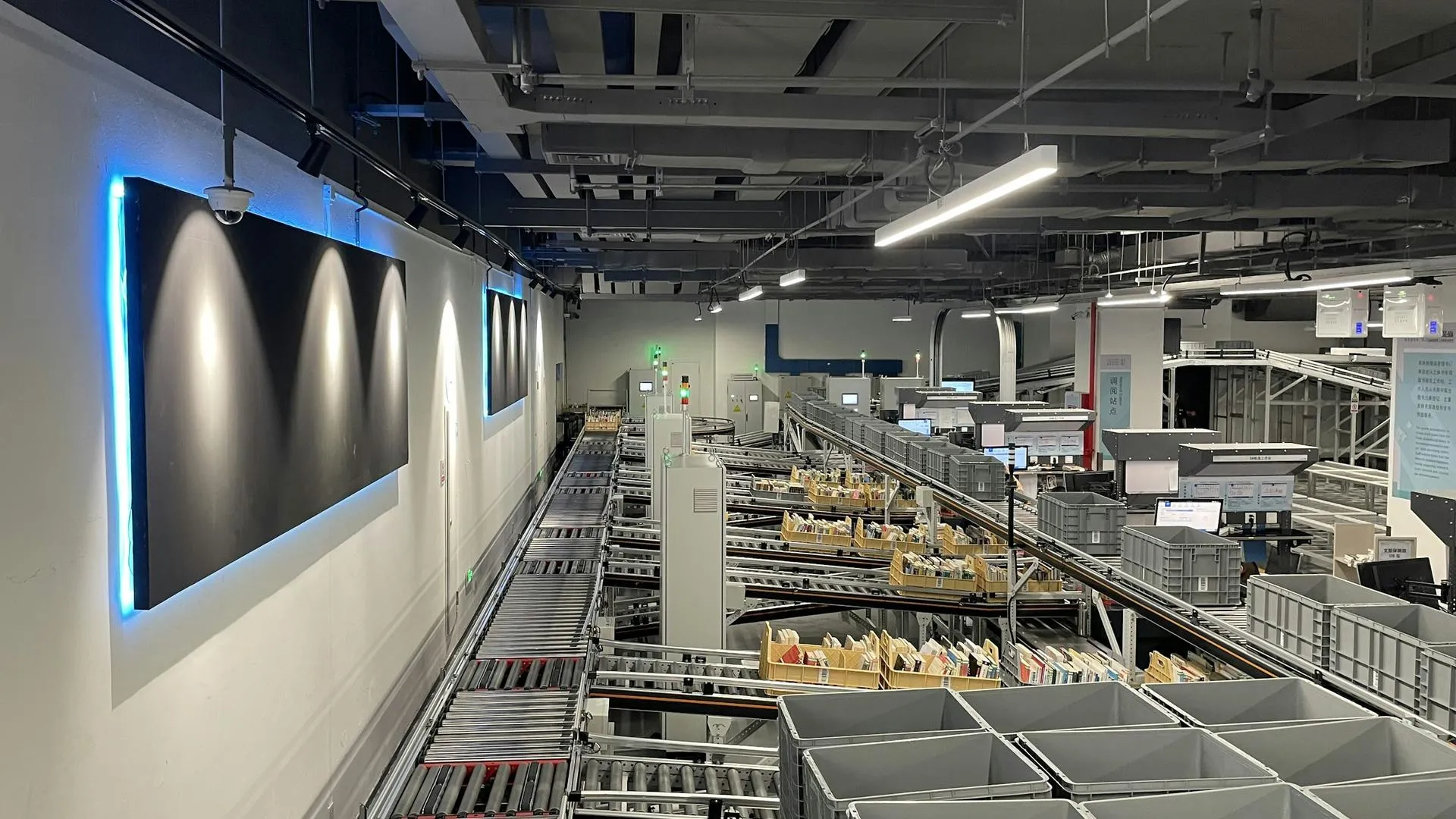
Cognex logistics scanning is the use of fixed DataMan readers and newer SLX devices to read every label on every parcel as it moves through a sorter, a tote line or a tunnel. It is the market where Cognex says it sees its largest growth potential, and its products there show what high-volume code reading looks like at its extreme. This page explains the tunnels, the SLX portfolio launched on 28 October 2025, how logistics shows up in Cognex’s revenue, and what a manufacturing plant’s shipping dock can copy.
It belongs to the DataMan page in the Cognex hub. For the company’s figures, see Cognex financials.
Why logistics matters to Cognex
It is the first end market Cognex names. The 10-K for fiscal 2025 lists logistics first among its largest end markets by revenue and says it “has the potential to be our highest-growth end market over the mid to long-term” (10-K FY2025). It also states that in 2025 it launched its first line of SLX devices for the logistics sector, and that it is moving beyond barcode reading to side-by-side detection, damage inspection and dimensioning.
The numbers, with periods. The 10-K for fiscal 2024 gave logistics as about 23 percent of revenue for fiscal 2024 (10-K FY2024). For fiscal 2025 the filing groups logistics, packaging, consumer electronics and automotive at about 85 percent combined and attributes growth primarily to higher revenue from logistics and consumer electronics, with Americas revenue up 16 percent, which Cognex attributes to logistics (large e-commerce customers) and a one-time partnership. The two years are not like-for-like because the grouping changed. The fiscal 2024 filing also attributes a fall in gross margin, from 72 to 68 percent, partly to higher logistics revenue mix alongside the Moritex acquisition.
Our read. Logistics demand is concentrated in large e-commerce and parcel operators, and Cognex’s own risk factors name the loss of large customers in logistics as a risk. A plant buying DataMan should know it is a small buyer in a market shaped by a few very large ones. We read the product roadmap, with the DM380, DM580 and SLX all aimed at logistics, as a sign of where Cognex invests, so check that a reader you specify for a plant is not one whose roadmap is driven by parcel hubs.
Tunnels: the DataMan 380 and 580
A vision tunnel is a frame over a conveyor with readers positioned so a package is read from several sides in one pass, whatever side the label is on.
- DataMan 580. Vision Systems Design reported the release of the DataMan 580 in February 2023: a fixed-mount reader with a 9 megapixel area scan imager, optimized for logistics sorting and designed for the Cognex Modular Vision Tunnel (Vision Systems Design). We could not open Cognex’s own release for the multi-sided tunnel layouts, so we do not describe them.
- Modular Vision Tunnel. Cognex introduced the 380 Modular Vision Tunnel, built on the DataMan 380, on 27 March 2024, and states it achieves a greater than 99 percent read rate with as few as four readers per tunnel, supported by Edge Intelligence Tunnel Manager (Cognex release). Layout options, frame adjustment and optional dimensioning tools are described in trade press and product listings that we could not open, so check Cognex’s current tunnel documentation for them.
- Tunnel Manager. Software in the Edge Intelligence family. Per Cognex’s manual it offers a live dashboard and custom performance dashboards, browsing of tunnel trigger results and images with queries and tagging, real-time device configuration changes and large storage for multi-day images and results, and it provides built-in MQTT forwarding to on-premise and cloud systems (Tunnel Manager manual).
SLX: the 2025 logistics portfolio
Cognex introduced the Solutions Experience (SLX) portfolio on 28 October 2025 (Cognex release). Three devices launched:
| Device | What Cognex says it does |
|---|---|
| SLX-280D | Barcode reading for zone routing and tote inspection |
| SLX-290 | Item classification and barcode reading |
| SLX-3816 | High-resolution side-by-side detection and barcode reading on large-format top labels |
Cognex states the portfolio has AI item detection, a guided web interface and on-device firmware updates with mass deployment. In the SLX-280D manual, EtherNet/IP and PROFINET are the industrial protocols, selected by radio button with a restart, with FTP or SFTP for result images, backup and restore, and password protection (SLX WebUI manual).
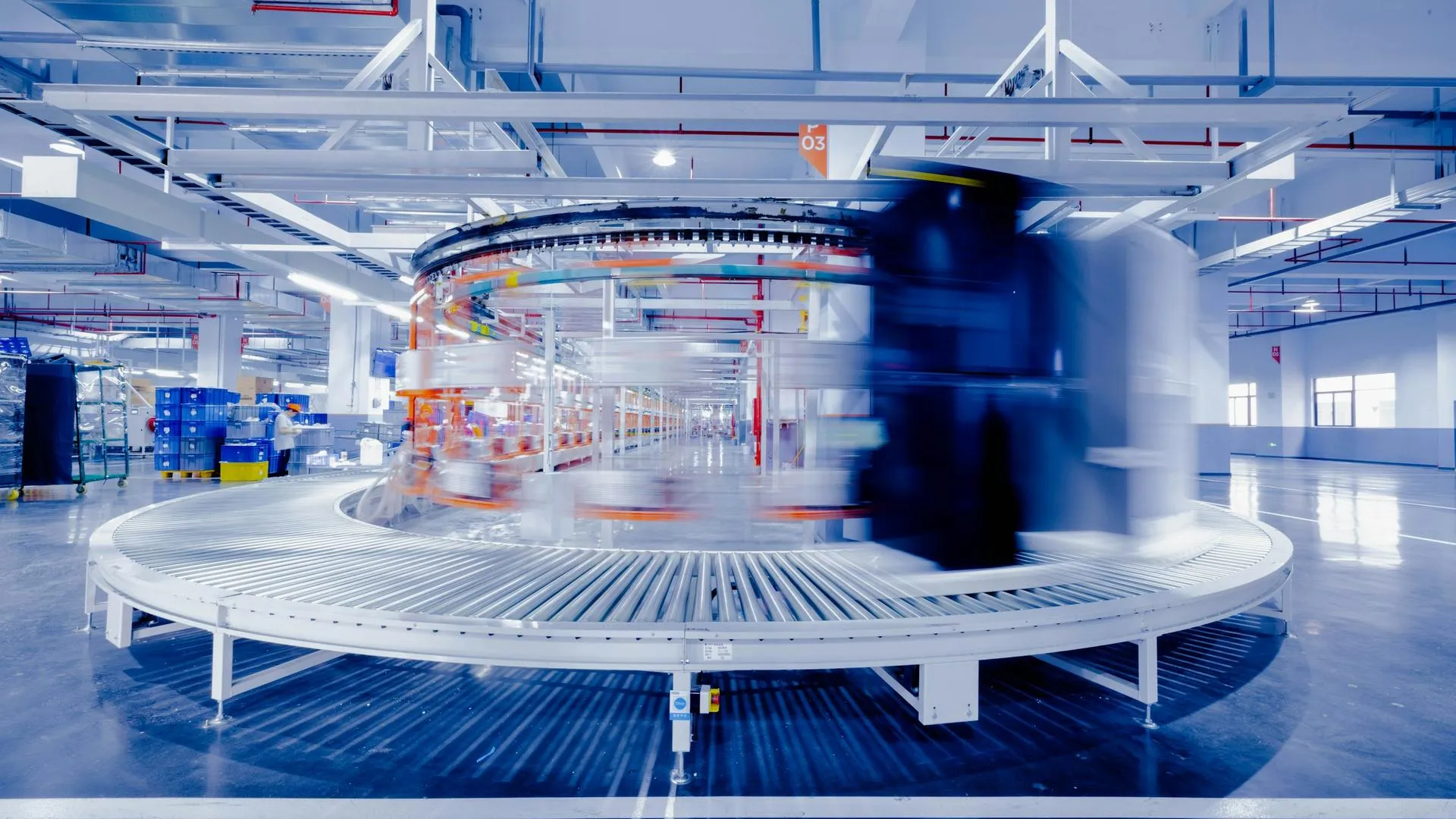
Dimensioning. Parcel dimensioning is a separate 3D problem, covered in dimensioning.
Choosing between one reader, a tunnel and SLX
This table is our view, not a Cognex recommendation. The device names are examples from the lineup above, and Cognex’s current documentation decides what fits.
| Situation | Likely fit | Why |
|---|---|---|
| One conveyor, label position fixed, tens of cartons a minute | One fixed DataMan reader | A good trigger and lighting matter more than extra readers |
| Mixed cartons, label face unknown, moderate volume | A small multi-reader layout | Reading from the top and sides removes the face problem |
| Parcels at hub speed, any face, dimensions needed | A five- or six-sided tunnel | The tunnel exists for this case, and the cost follows |
| Tote or zone routing with item classification | An SLX class device | Cognex built it for sortation tasks beyond reading |
Connecting to the plant
Tunnels and SLX devices still talk to a PLC the same way a single reader does. The SLX manual lists EtherNet/IP and PROFINET, and the DM380 manual lists EtherNet/IP, PROFINET and SLMP with Multi-Reader Sync and PTP for coordinating readers (DM380 manual). The PLC still has to decide which read wins when two readers see one parcel, and what to do when none does. See EtherNet/IP and Studio 5000 for the Rockwell side.
What a plant’s shipping dock can learn
A parcel hub and a plant dock share the same failure modes at different scale. In our view these carry over:
- Trigger from the product, not a timer. A photoeye or the PLC triggers the read, and the PLC matches the result to that trigger, see the DataMan handshake.
- Read every face or control the face. A tunnel reads any side. On a plant dock, fix the label position and one reader is enough.
- Store the image of every no-read. Cognex’s Tunnel Manager lets you browse tunnel trigger results and images for a reason: diagnosis from stored images is faster than guessing.
- Track read rate as a metric. A falling read rate shows print, lighting or mounting drift before shipments are held.
- Plan the fallback. A handheld at the dock handles the no-reads without stopping the line.
- Monitor and back up. Configuration drift on multi-reader systems is a known problem, and mass deployment tools exist for a reason.
Where it gets hard
Line speed against exposure. Faster conveyors need shorter exposure, which needs more light, which brings glare. All three move together.
Label variability. Parcels carry multiple labels, curved film, damaged and low-contrast codes. Cognex markets AI features for damaged codes for this reason, though we have not tested them.
Result handling. In a tunnel several readers see one parcel. Deciding which result wins is application logic you own.
Network load. Image transfer from many readers can load a plant network. Plan bandwidth and where images are stored.
Fitting to a plant. Most plants do not need a tunnel. Match the device to the volume.
Related pages
Back to the DataMan page and the Cognex hub. For the print side of dock labels, see barcode verification. For PLC wiring and handshakes on the dock, we offer commissioning support.
Frequently asked questions
What is a Cognex vision tunnel?
A vision tunnel is a frame over a conveyor that carries several fixed readers so a package can be read on every side as it passes. Cognex announced its Modular Vision Tunnel, built on the DataMan 380, on 27 March 2024, and states it achieves a greater than 99 percent read rate with as few as four readers per tunnel. We could not verify its layout options or dimensioning add-on from an opened source.
What is Cognex SLX?
SLX, short for Solutions Experience, is a line of Cognex devices for logistics launched on 28 October 2025. It started with three devices: the SLX-280D for zone routing and tote inspection, the SLX-290 for item classification and barcode reading, and the SLX-3816 for high-resolution reading of large top labels. Cognex states they use AI item detection and a guided web interface.
How much of Cognex revenue is logistics?
Cognex's 10-K for fiscal 2024 puts logistics at about 23 percent of revenue. For fiscal 2025 the filing says logistics, packaging, consumer electronics and automotive together made up about 85 percent, without a separate logistics share in the text we read. The company says logistics has the potential to be its highest-growth end market over the mid to long term.
Can a manufacturing plant use logistics scanning ideas on its own dock?
Yes, the principles carry over: read every label reliably at conveyor speed, match each read to the right package, store an image of every failed read, and watch read rate as a metric. A plant's dock has fewer packages per hour than a parcel hub, so a single fixed reader and a good trigger are often enough.
References and further reading
- Cognex introduces the Solutions Experience (SLX) logistics portfolio · Cognex (PR Newswire)The 28 October 2025 launch release.
- Cognex Modular Vision Tunnel with DataMan 380, 27 March 2024 · Cognex (release reprint)
- SLX WebUI Reference Manual · Cognex documentationProtocols, FTP image transfer and firmware handling for the SLX devices.
- Tunnel Manager Reference Manual 2.2 · Cognex documentation
- Cognex Form 10-K for fiscal 2025 · Cognex / SEC filingHow Cognex describes logistics as an end market.
- Cognex Form 10-K for fiscal 2024 · Cognex / SEC filingThe fiscal 2024 end-market shares and the margin effect of logistics mix.