
Cognex
Cognex Legacy In-Sight Cameras: Lifecycle and Security
Cognex legacy In-Sight cameras: lifecycle signals, the Explorer and Vision Suite split, three CISA advisories, segmentation and spares.
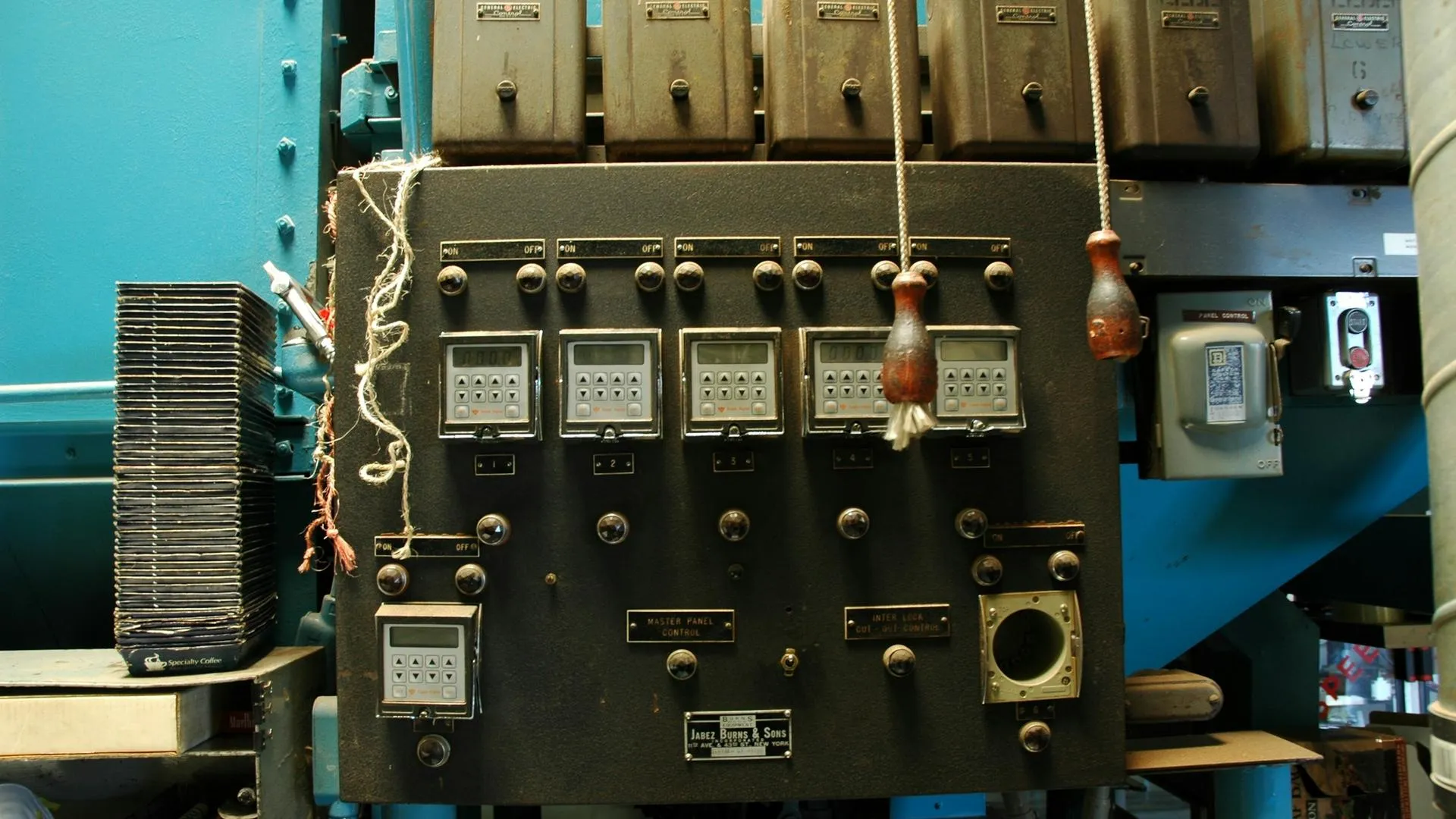
A plant holding older Cognex In-Sight cameras, meaning the 2000, 7000, 8000 and 9000 families, has two separate questions to answer. One is lifecycle: how long can these cameras be bought, repaired and supported. The other is security: a September 2025 CISA advisory lists no fix for the software and firmware of this generation, and security researchers report that Cognex does not plan patches. This page explains what Cognex has said publicly, what we could not find, and what a sensible plan looks like for a cognex legacy in-sight estate. It sits under the Cognex technology hub, and the company background is in the Cognex company profile.
Short answer. Do not panic-replace, and do not ignore it. These cameras still run lines and Cognex still documents them. But the flaws in ICSA-25-261-06 come with no fix in the advisory, and Nozomi Networks, whose researcher reported them, writes that no security patches are planned, so the camera and its Explorer workstation have to sit inside network controls that make the flaws unreachable. Replacement then becomes a planned project, covered in replacing older In-Sight cameras.
How Cognex signals lifecycle, and what we could not find
We found no public lifecycle notice. Cognex’s own product-status and support pages returned errors or sit behind a login when we tried them in November 2026, so any end-of-sale, last-time-buy or “legacy” list that lives there was not read. Everything below is read from what is public: manuals, release notes, launch press releases and the CISA advisory. We label each family by what those show, and we say so where the label is our inference.
The signals that are public:
- Manuals stay online. docs.cognex.com still hosts the 7000, 8000 and 9000 manuals. The 7000 and 8000 manuals are dated August 2022. A manual on the site is not a lifecycle statement.
- Explorer still lists the firmware. The In-Sight Explorer 6.5.1 release notes (October 2024) list firmware for 7000 second generation, 8000 and 9000 among others, and list no 2800, 3800 or 3900.
- Cognex’s own wording in the advisory. CISA quotes Cognex calling In-Sight Explorer-based systems “legacy products not intended for new applications”.
| Family | First seen | Our label (November 2026) | Basis |
|---|---|---|---|
| In-Sight 3900, 8900, 3800, 2800 | 2022 to 2026 launches | Current | Launch releases and current manuals; run In-Sight Vision Suite |
| In-Sight 9000 | Announced November 2018 | Mature | Still in the Explorer 6.5.1 firmware list; named in the 2025 advisory |
| In-Sight 7000 second generation, 8000 | 7000 second generation: 2017 per trade press. 8000: launch year not verified | Mature, probably legacy (our inference) | 2022 manuals, Explorer-only, named in the advisory |
| In-Sight 7000 first generation, 2000 | Earlier | Older; no Cognex status notice found | Named in the advisory (2000 and 7000 lines) |
“Mature” here means documented and not announced as discontinued, as far as we could find. It does not mean new stock is available. Ask Cognex or your distributor in writing.
The software split: In-Sight Explorer and In-Sight Vision Suite
The two names matter because the security story follows the software line.
In-Sight Explorer is the older PC tool. Its versions run 5.x and 6.x, and the last release we found is 6.5.1 from October 2024. It covers the 7000 second generation, 8000 and 9000 families, and also the 2000, 5000 and Micro families, but not the 2800, 3800 or 3900.
In-Sight Vision Suite is the software for the 2800, 3800, 3900 and 8900. Cognex’s release history shows it starting at release 22.1.0 and adding the 3800 in 23.1.0. Cognex describes it in the 3800 launch release as a platform shared across In-Sight products. Whether Cognex formally says Vision Suite replaces Explorer, we could not confirm in text we could read. That is an inference, though the advisory’s advice to move to Vision Suite systems points the same way.
The Vision Suite release history also lists security-relevant features appearing from 2024: audit logging (24.3.0), single sign-on (24.4), Secure Connection over HTTPS and elevated access (25.1.0), a Services and Ports setting (25.3.0) and a minimum password strength option (26.2.0). Read the release history for the exact scope of each. We note only that they exist on the newer line and not on Explorer 6.5.1.

The three CISA advisories involving Cognex
We found three CISA industrial control system advisories naming Cognex products. The search may not be complete, and Cognex’s own security advisory page was not reachable. Each links to CISA.
| Advisory | Product and versions | What CISA lists | Fix |
|---|---|---|---|
| ICSA-25-261-06, 18 September 2025 | In-Sight 2000, 7000, 8000 and 9000 series and In-Sight Explorer, all versions 5.x through 6.5.1 | Nine vulnerabilities: hard-coded password, credentials exposed in cleartext during firmware upgrade and on TCP port 1069, weak Windows folder permissions, a telnet login denial of service, two telnet privilege flaws, an encryption key reused so passwords can be replayed, client-side-only security checks. Overall CVSS v4 score 8.6 | None offered. Cognex points to In-Sight Vision Suite systems |
| ICSA-22-249-03, last revised 6 September 2022 | 3D-A1000 Dimensioning System firmware 1.0.3 (3354) and prior | Three vulnerabilities including missing authentication (CVSS v3 9.8) | CISA says Cognex reportedly fixed the issues in release 1.2 PR2; details sit behind Cognex support login |
| ICSA-21-224-01, last revised 12 August 2021 | In-Sight OPC Server 5.7.4 (96) and earlier | Deserialization of untrusted data (CVSS v3 8.8) | Upgrade to 5.9.2 or later |
The 2025 advisory is the one that matters for this page, and the 2025 advisory page goes through it in detail. At publication, CISA reported no known public exploitation of those nine issues. The vulnerabilities were reported by Diego Giubertoni of Nozomi Networks.
We found no CISA advisory for a DataMan reader. That is a statement about our search, not proof that none exist.
Network segmentation and compensating controls
When a flaw will not be patched, the camera’s exposure is the control you have left. In our view, the right outline is the one CISA gives and the ISA/IEC 62443 zone approach formalises: keep the device off the internet, separate it from business networks, and decide exactly which conversations are allowed.
What to put in place, in order:
- Inventory. List every older In-Sight camera, its model, firmware and which Explorer installations manage it. You cannot segment what you have not found.
- Take it off any route to the internet. CISA’s first instruction is to ensure control systems are not accessible from the internet.
- Give the cameras their own zone. A cell VLAN or a small firewalled segment, with the PLC, one engineering workstation and the image or data server as the only permitted peers.
- Treat the Explorer workstation as in scope. One of the nine issues is a weak-permission data folder on the Windows PC where the software is installed, and the advisory says an attacker can use a hard-coded password embedded in the publicly available software. Limit who can log in, keep it patched at the operating system level, and do not use it for email or browsing.
- Use a VPN for remote support, kept updated, as CISA advises, and never open the camera’s ports to a vendor connection directly.
- Watch the cell boundary. Alert on any new device talking to the cameras. Plant networks are quiet, so a new conversation stands out.
This is what an OT network assessment delivers for a camera estate: the inventory, the zone design and the firewall rule list. Our OT networks page explains the wider approach.
Spares strategy
Mature does not mean unavailable, but it does mean the supply can narrow. We would decide on a per-line basis:
- Line-stopping camera, no manual fallback: hold a configured spare on the shelf, tested in a bench network, with the job and settings backed up away from the camera.
- Camera with a manual fallback or a rework loop: run to failure, but keep the job backup and the lens, light and cable kit so a replacement is a swap.
- Anything sitting on a recipe-heavy line: back up every job, because rebuilding from memory is the slowest part of a failure.
Ask Cognex or your distributor, in writing, about lead time, repair service and any last-time-buy terms. We could not find that information publicly. A spare of a camera with known unpatched flaws belongs in the same network zone as the camera it backs up.
How it fails
These are the failure modes we would plan for. They are general field patterns, not statements about Cognex’s design.
- The Explorer PC dies and nobody has the job. The camera keeps running until it needs a change, a lens swap or a replacement, then the line waits on a laptop with an old licence and a job nobody backed up.
- A replacement camera arrives with a different firmware. The job loads but a tool behaves differently, and the first parts through are judged wrongly. Run the old and new in parallel before trusting it.
- A flat network exposes the camera. A camera on the same network as office laptops is reachable by any compromised device. Most of the advisory’s flaws are rated adjacent-network or local, so containment is real mitigation.
- Credentials shared and never rotated. The advisory describes hard-coded and replayable credentials. Shared passwords on a mature install compound that.
- No one owns it. Controls owns the PLC, IT owns the switch, quality owns the reject. The camera falls between them until the advisory arrives.
What we do here
Our team has programmed in-line inspection on Cognex In-Sight cameras at large food and consumer-goods manufacturers, and we integrate Cognex cameras and readers with PLCs, line controls and data systems as part of controls projects. We have no commercial relationship with Cognex and do not resell its products. On this topic that means:
- Building the inventory of cameras, firmware, Explorer installs and PLC connections.
- Designing the network zone and the firewall allow list, with your IT team.
- Backing up and documenting jobs so a failed camera or PC is a swap.
- Specifying and testing a replacement, including the PLC handshake changes, as in the replacement page.
- Writing the commissioning checks that prove old and new agree before cutover, through commissioning support.
- Fitting a camera phase-out into a wider control system modernization plan.
Limits and open questions
- No Cognex lifecycle statement was reachable. Every “mature” label is our reading of public evidence as of November 2026.
- We do not know the end-of-support date for any Explorer-era camera, and Cognex has not published one that we found.
- The three advisories may not be the full list. We searched CISA and related sources. Cognex’s own security page was not read.
- Which firmware level a given camera runs matters for what is exposed. We do not recommend a specific firmware revision. Check Cognex’s current documentation.
- Whether Cognex formally positions Vision Suite as the replacement for Explorer is our inference from the advisory.
Deeper
- The 2025 advisory: In-Sight Explorer vulnerabilities explains the nine issues and what CISA and Cognex advise.
- Replacing older In-Sight cameras covers candidate models, job conversion and a checklist.
- Related: Vision Suite vs In-Sight Explorer for the software split, and the sibling PLC integration page for the handshakes a replacement changes.
Frequently asked questions
Are Cognex In-Sight 7000, 8000 and 9000 cameras discontinued?
We could not find a Cognex end-of-life notice for them, because Cognex's product-status pages were not reachable to us without a login. As of November 2026 their manuals are still published and In-Sight Explorer 6.5.1 still lists their firmware, so we call them mature. Confirm status and spares with Cognex or your distributor.
Will Cognex patch the 2025 In-Sight Explorer vulnerabilities?
CISA advisory ICSA-25-261-06 lists no patch or fixed version. It quotes Cognex as saying In-Sight Explorer-based systems are legacy products not intended for new applications, and it points users toward In-Sight Vision Suite systems such as the 2800, 3800 and 8900. Plan on compensating network controls, not a firmware fix.
What is the difference between In-Sight Explorer and In-Sight Vision Suite?
In-Sight Explorer is the older PC software, last found at version 6.5.1 from October 2024, covering the 2000, 7000, 8000 and 9000 families among others. In-Sight Vision Suite is the software for the 2800, 3800, 3900 and 8900 systems. Cognex does not say in text we could read that one replaced the other.
How do I protect an older In-Sight camera I cannot replace yet?
Keep it off the internet, put it in its own network zone behind a firewall, allow only the PLC, the programming workstation and the image or data server to reach it, and treat the Explorer workstation as part of the attack surface. CISA's advice is the same in outline: minimise exposure, firewall, segment, VPN for remote access.
Should we stock spares for older In-Sight cameras?
Hold a tested, configured spare for any camera whose failure stops a line, with its job and settings backed up, because availability is not guaranteed once a family is mature. Check lead times and repair options with Cognex or your distributor first. Spares of a camera with known unpatched flaws also need the same network controls.
References and further reading
- Cognex In-Sight Explorer and In-Sight Camera Firmware (ICSA-25-261-06) · CISAThe September 2025 advisory: affected versions, nine vulnerabilities, Cognex's statement and the mitigations.
- Cognex 3D-A1000 Dimensioning System (ICSA-22-249-03) · CISA
- Cognex In-Sight OPC Server (ICSA-21-224-01) · CISA
- In-Sight Explorer 6.5.1 release notes · Cognex documentationThe firmware list that shows which families Explorer still covers.
- In-Sight Vision Suite release history · Cognex documentationRelease-by-release list, including the security features added from 2024.
- Nozomi Networks Labs: Cognex In-Sight IS2000M-120 smart camera vulnerabilities · Nozomi NetworksThe researchers' write-up, dated 24 September 2025, stating that no security patches are planned.