
OTSSM: AMDT's OT Service and Security Management, and Where octoplant Fits in an IT/OT Stack
octoplant ServiceNow Integration: Putting OT Device Content into the CMDB
octoplant and ServiceNow: what the octovision Export API can send to a CMDB, how ServiceNow's OT strategy shapes it, and a data flow design to build.
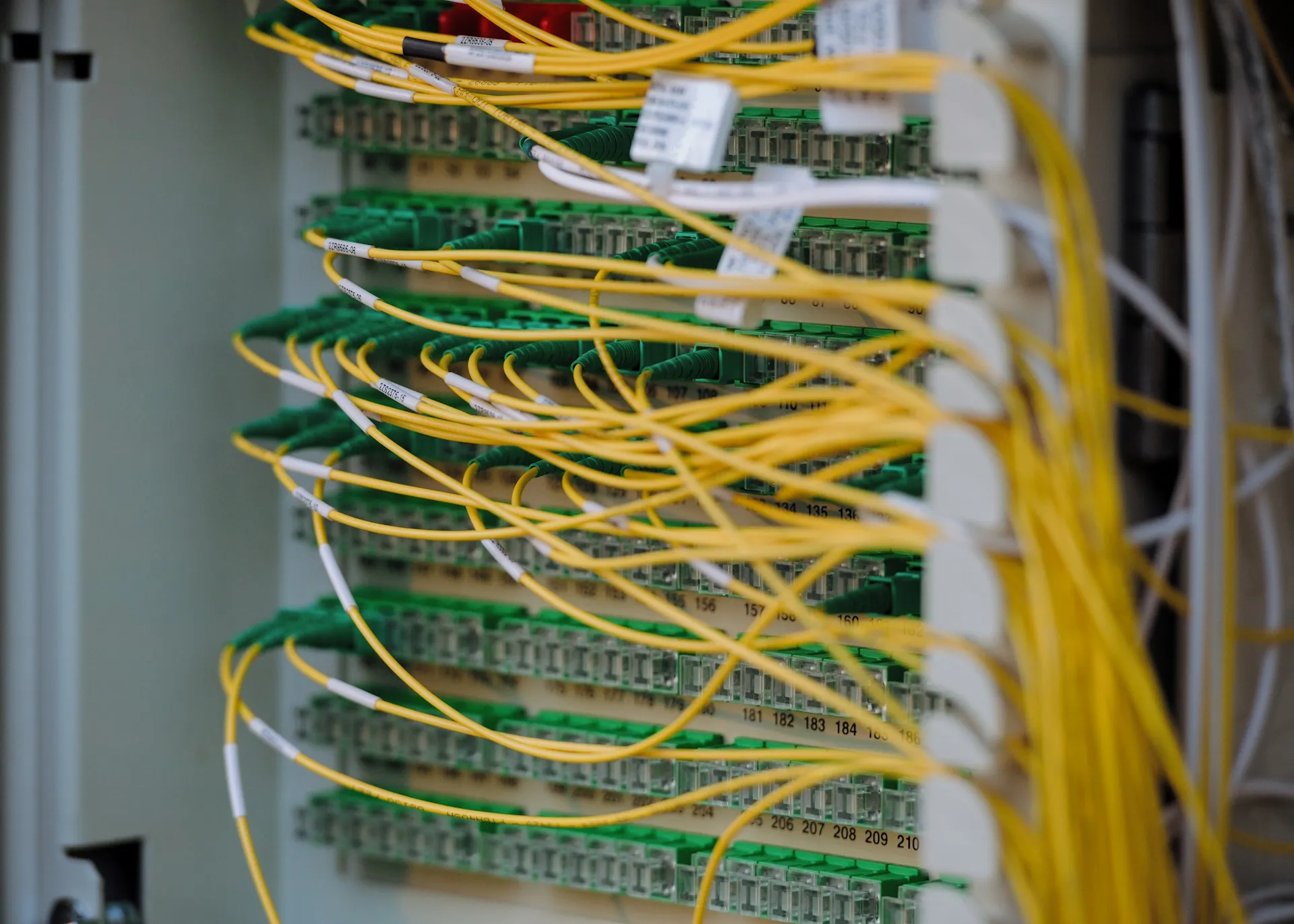
Most questions about an octoplant ServiceNow integration come down to one: can the device content octoplant collects (program versions, firmware, backup status) land in ServiceNow’s CMDB, where IT, security and governance already work? As of October 2026 the short answer is that AMDT ships an export path aimed at ServiceNow, but we found no certified integration, so the mapping is something a site designs and owns. This page sets out ServiceNow’s OT strategy, what octoplant data adds to it, and a data flow design that holds up.
It sits under OTSSM and Integrations, which explains AMDT’s OT Service and Security Management model and where each tool fits.
Why ServiceNow is the ITSM platform that matters for OT
Among ITSM vendors, ServiceNow is the one with a developed OT strategy. We found no comparable OT products from BMC, Ivanti or Atlassian.
- Operational Technology Management (OTM) extends the CMDB with OT asset classes and production-process context, plus OT asset management and OT incidents.
- OT Vulnerability Response prioritises vulnerabilities by the criticality of the process a device controls (ServiceNow documentation).
- Armis. ServiceNow completed its $7,750,000,000 acquisition of Armis on 20 April 2026, giving it network-based asset discovery across IT, OT and IoT (ServiceNow).
- Siemens. Since October 2024, output from Siemens SINEC Security Guard and Industrial Copilot can flow into ServiceNow workflows (ARC Advisory Group).
What that stack still lacks is device-content truth. Discovery tells ServiceNow a controller exists, roughly what it is and what it talks to. It does not tell it which program version is running, whether that matches the approved version, or whether a restorable backup exists. That is exactly what octoplant holds.

What octoplant can send to ServiceNow today
Two AMDT features are relevant, both covered in more depth on the Export API page:
- The octovision Export API, introduced in Spring Release 107 on 7 April 2026, to “transfer production data to ITSM platforms such as ServiceNow and other enterprise systems” (AMDT).
- octovision’s exports and open API: CSV and JSON exports, and an API to “connect with your SIEM, CMDB, ticketing, or analytics tools” (octoplant.com).
octovision’s own inventory is built bottom-up from octoplant’s project and configuration data: vendor, type, firmware and software, components, jobs and CVEs, plus backup and job visibility. The octovision asset inventory page covers how that inventory is assembled. The CMDB-relevant point is that these fields come from the device’s own project data, not from a network fingerprint.
What we could not confirm publicly: the exact field list, the API’s authentication method, and whether the export is pull, push or both. The documentation sits behind the myAMDT login.
octoplant ServiceNow fields: which come from where
The table below is a design proposal, not AMDT’s schema. It assigns each OT configuration item field to the source we would trust most.
| CMDB field (OT configuration item) | Best source | Why |
|---|---|---|
| Name, site, line, cell | ServiceNow OTM (process context) | The plant hierarchy is a governance decision, not a device fact |
| IP and MAC address, communication peers | Network discovery (Armis or another platform) | Seen on the wire; octoplant does not focus on traffic |
| Vendor, model, hardware components | octovision (from project data) | Read from the configuration, including modules a scan may miss |
| Firmware and software version | octovision | Exact versions from project data rather than inferred fingerprints |
| Program or project version, last change | octoplant | Version history with who and when |
| Last backup date and job status | octoplant / octovision backup visibility | Proves a restore point exists |
| Running versus approved compare result | octoplant change detection | The integrity signal no other tool provides |
| CVE matches | octovision, reconciled with OT Vulnerability Response | Firmware-exact matching; ServiceNow adds process criticality |
| Lifecycle and obsolescence status | octovision lifecycle data | Feeds capital planning |
| Criticality | ServiceNow OTM, or octovision criticality classification (Summer 2026) | Decide which one wins before go-live |
| Owner, support group | ServiceNow | Organisational data |
Designing an octoplant ServiceNow data flow
A design we would start from:
- Fix the scope. Pick one site and one asset class (for example, the line PLCs) before touching every device.
- Agree the identity key. Decide how an octoplant component maps to a ServiceNow configuration item: asset tag, serial number, or a site-line-device naming convention. This is the step that fails quietly, so test it on real data first.
- Decide field ownership. Use the table above. Each field gets exactly one authoritative source, so discovery and octovision do not overwrite each other on every sync.
- Prefer a scheduled, read-only collection through a defined conduit. A service account with read-only rights collects from the export on a schedule, through the plant’s zone and conduit rules. Confirm with AMDT how the API is called before fixing the direction. The Export API page covers the zone considerations.
- Start with read-only enrichment. Firmware, backup status and compare result on each OT configuration item, before any automated ticket creation.
- Then add events. An unapproved change detected by octoplant raises an incident or a change review task; a new CVE match raises a vulnerability item that OT Vulnerability Response ranks by process criticality.
- Close the loop by reference. Record the ServiceNow change number in the octoplant check-in comment, and attach the compare result to the change record.
A plant scenario (illustrative). A pharmaceutical site’s change board approves a firmware update on a filling-line controller. The ServiceNow change record carries the number; the engineer checks out the project in octoplant, makes the change and checks it in with that number in the comment. The next scheduled compare confirms running matches approved, and the CMDB item shows the new firmware and a fresh backup. The auditor reads one record, not three systems.
How to tell the integration is working. Three numbers, reviewed monthly, show whether the data is trusted or quietly decaying:
| Measure | What a healthy value looks like | What a bad trend means |
|---|---|---|
| OT configuration items with a backup date newer than the agreed interval | Close to every in-scope item | Jobs failing, or devices added to the CMDB but never to octoplant |
| Duplicate or unmatched OT configuration items | Falling after go-live, then near zero | The identity key from step 2 is not holding |
| Items where running does not match approved for more than a week | A short list, each with an owner | Change records and device reality are drifting apart |
Where it gets hard
- No certified connector. Without one, every ServiceNow or octoplant upgrade is a regression test for your integration. Budget for ownership, not just the build.
- Identity matching. octoplant names devices the way engineers named them; the CMDB names them the way IT did. Mismatches create duplicate configuration items that erode trust in the CMDB.
- Two criticality models. octovision’s Summer Release 2026 added criticality classification (octoplant.com), and ServiceNow OTM has its own. Running both without a rule produces two answers.
- Alert volume. Feeding every detected change into the incident queue will swamp the service desk during a commissioning week. Filter by approval status and asset criticality.
- Organisational ownership. The service desk owns ServiceNow, controls owns octoplant, and neither owns the mapping. Name an owner before go-live; our IT/OT integration work usually starts there.
For the network discovery side of the same CMDB, including Armis, see octoplant and OT security platforms. Back to the AMDT hub.
Frequently asked questions
Is there a certified octoplant app in the ServiceNow Store?
We found none as of October 2026. AMDT's Spring Release 107 introduced an octovision Export API and names ServiceNow as an example target, but no Store application, certified integration or published joint reference architecture was visible publicly. Ask AMDT or your partner whether a maintained connector exists before budgeting a custom build.
What octoplant data is useful in a ServiceNow CMDB?
The data network discovery cannot see: firmware and software versions read from the device's own project data, the hardware components inside a controller rack, the date and result of the last backup, whether the running program matches the approved version, CVE matches and lifecycle status. Those fields turn an OT configuration item from 'a device exists' into 'this is what it runs and whether we can restore it'.
How does ServiceNow handle OT assets?
ServiceNow's Operational Technology Management extends the CMDB with OT asset classes and production-process context, and OT Vulnerability Response prioritises vulnerabilities by the criticality of the process a device controls. Since April 2026 ServiceNow also owns Armis, which supplies network-based discovery across IT, OT and IoT.
Should octoplant or ServiceNow be the system of record for OT changes?
They hold different records. ServiceNow suits the change request, approval and schedule. octoplant holds the program versions, the compare between running and approved, and the restore point. The workable pattern is to reference one from the other: a change number recorded against the octoplant check-in, and the compare result attached to the change record.
Does Armis in ServiceNow replace octoplant?
No. Armis discovers devices from network data and fingerprints them. It does not hold the PLC program, compare it against an approved version or restore it. The two are complementary inputs to the same CMDB, and a site that has both should decide which source wins for each field.
References and further reading
- Operational Technology Vulnerability Response · ServiceNow documentationPrioritising OT vulnerabilities by the criticality of the production process.
- ServiceNow completes Armis acquisition, closing the gap between asset visibility and cyber risk · ServiceNow
- Siemens and ServiceNow Strengthen Shopfloor Security and Drive Generative AI-powered Automation for Shopfloor Operations · ARC Advisory Group
- Octoplant spring release (107) · AMDTThe octovision Export API, with ServiceNow named as a target.
- Octovision · AMDT (octoplant.com)
- Octovision Summer Release · AMDT (octoplant.com)Adds criticality classification, which overlaps ServiceNow OTM's own model.